
Mature English oak in low morning mist across parkland

Protecting Our Trees. Protecting Our Heritage.

Oak Processionary Moth advice, identification and management

A dedicated UK resource for anyone who has found something unusual on an oak tree — and for the organisations responsible for keeping people safe beneath them. Calm guidance, official reporting routes and professional management support.

Think you've found OPM?

Five steps, in the right order

Most people arrive here having seen something unusual on an oak tree and wanting to know whether it matters. Work through these steps calmly — nothing here needs to be done in a hurry, and nothing here asks you to get close to the tree.

We aim to respond within 48 hours.

  1. 01

    Keep your distance

    Do not touch, disturb or attempt to remove suspected caterpillars or nests.

    • Keep people, children and pets away from the immediate area where appropriate
    • Brief staff, contractors and visitors who work near the tree
    • Avoid strimming, blowing or pressure-washing beneath the tree
  2. 02

    Take photographs

    If it is safe to do so, take clear photographs from a distance.

    • The caterpillars, and the nest or webbing
    • The oak leaves and the branch they are on
    • The wider tree, so height and position are clear
    • Approximate nest location and the surrounding area

    Do not climb trees or put yourself at risk simply to obtain a photograph.

  3. 03

    Ask an OPM expert

    If you are unsure what you have found, send us your photos.

    • Our OPM team can provide an initial visual opinion
    • You will get practical guidance on what to do next
    • Response targeted within 48 hours
  4. 04

    Report suspected OPM

    Suspected Oak Processionary Moth sightings should be reported through the official TreeAlert reporting system.

    • TreeAlert is an external official reporting service and opens in a new tab
    • Submitting photographs to us does not replace TreeAlert reporting
  5. 05

    Need professional help?

    Some sites need more than guidance — particularly where several oaks or busy public areas are involved.

    • Professional inspection and risk assessment
    • Monitoring, nest management and safe removal
    • Tree mapping and annual management planning

The two routes

Identification guidance and official reporting are separate things

We can help you work out what you are looking at. TreeAlert is where suspected sightings are formally recorded. Most people need both.

Not sure what you've found?

Ask an OPM Expert

Send clear photographs of the tree, the caterpillars or the suspected nest and our team will give you an initial visual opinion to help you understand your next steps.

Photo identification is preliminary and may not always be conclusive. A professional site inspection or official confirmation may be required.

Think it may be OPM?

Report Suspected OPM

Suspected Oak Processionary Moth sightings should be reported through TreeAlert, the official tree pest and disease reporting service. This is an external official service and opens in a new tab.

Sending us photographs does not replace official TreeAlert reporting.

Understanding OPM

What is Oak Processionary Moth?

A non-native moth, established in parts of the UK, whose caterpillars are both a tree health issue and a public health concern.

Oak Processionary Moth (Thaumetopoea processionea) was accidentally introduced to the UK and is now established in parts of London and surrounding counties, with occasional findings further afield. Its caterpillars feed on oak foliage and move in the distinctive nose-to-tail processions that give the species its name.

The concern is not simply defoliation. Each caterpillar carries thousands of microscopic hairs which can cause itching rashes, eye irritation and respiratory discomfort. Those hairs remain in nests and shed skins long after the caterpillars themselves have moved on, which is why old nests are still treated as a hazard.

For most people, the practical questions are simple: is this OPM, does it matter where it is, and who needs to know? That is what this site is built to answer.

Sunlight through the canopy of a mature oak tree
Mature oaks are long-lived heritage trees; the aim of OPM management is to protect both the tree and the people beneath it.

Identification

How to identify Oak Processionary Moth

Six things to look for. Species, host tree and behaviour together are far more reliable than appearance alone — and several harmless native caterpillars are regularly mistaken for OPM.

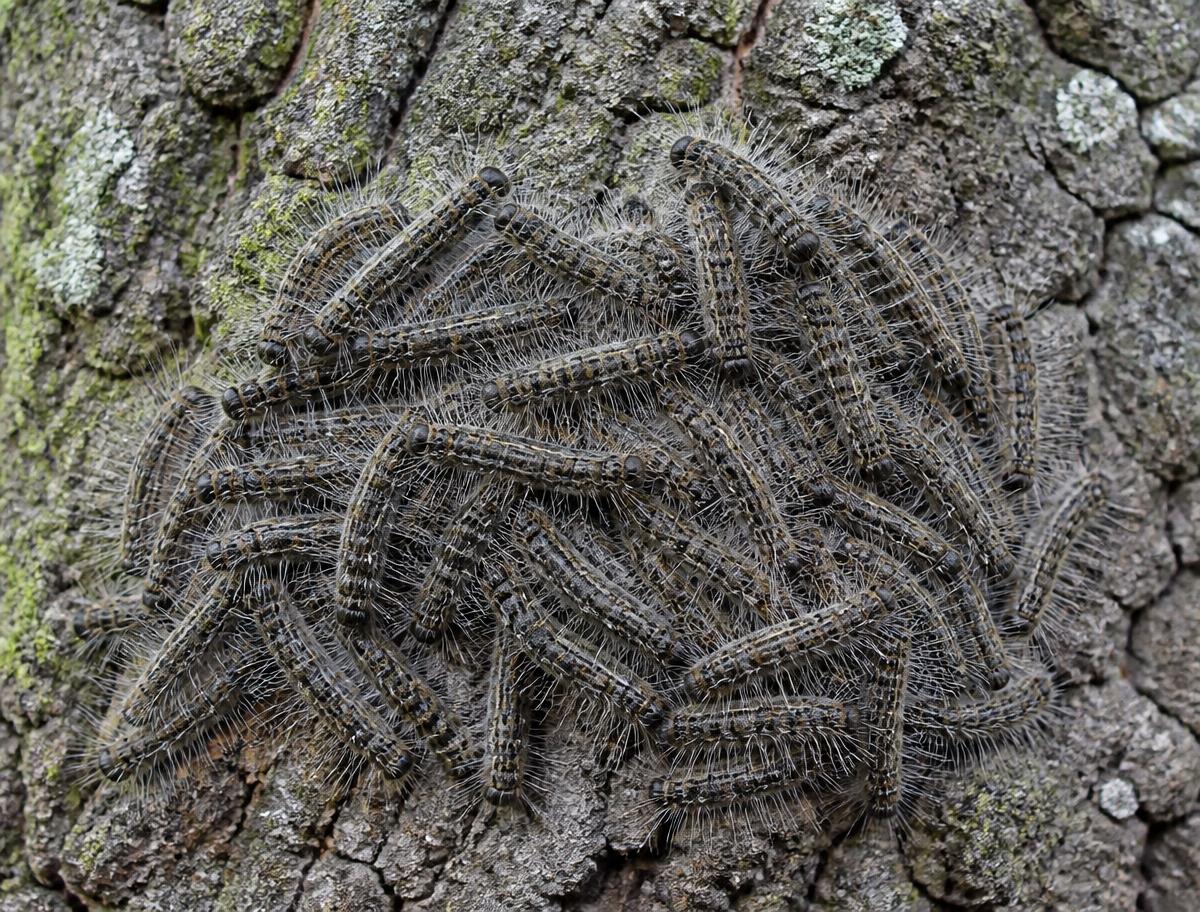
Cluster of hairy grey-brown caterpillars grouped on oak bark
Illustrative image — not a scientific reference photograph.

Caterpillars

Grey-brown bodies covered in very long white hairs, with a darker head and a distinct dark line along the back in later stages. They are almost always found in groups rather than alone, and they are found on oak.

  • Dense white hairs
  • Gregarious — rarely solitary
  • Found on oak, not other species
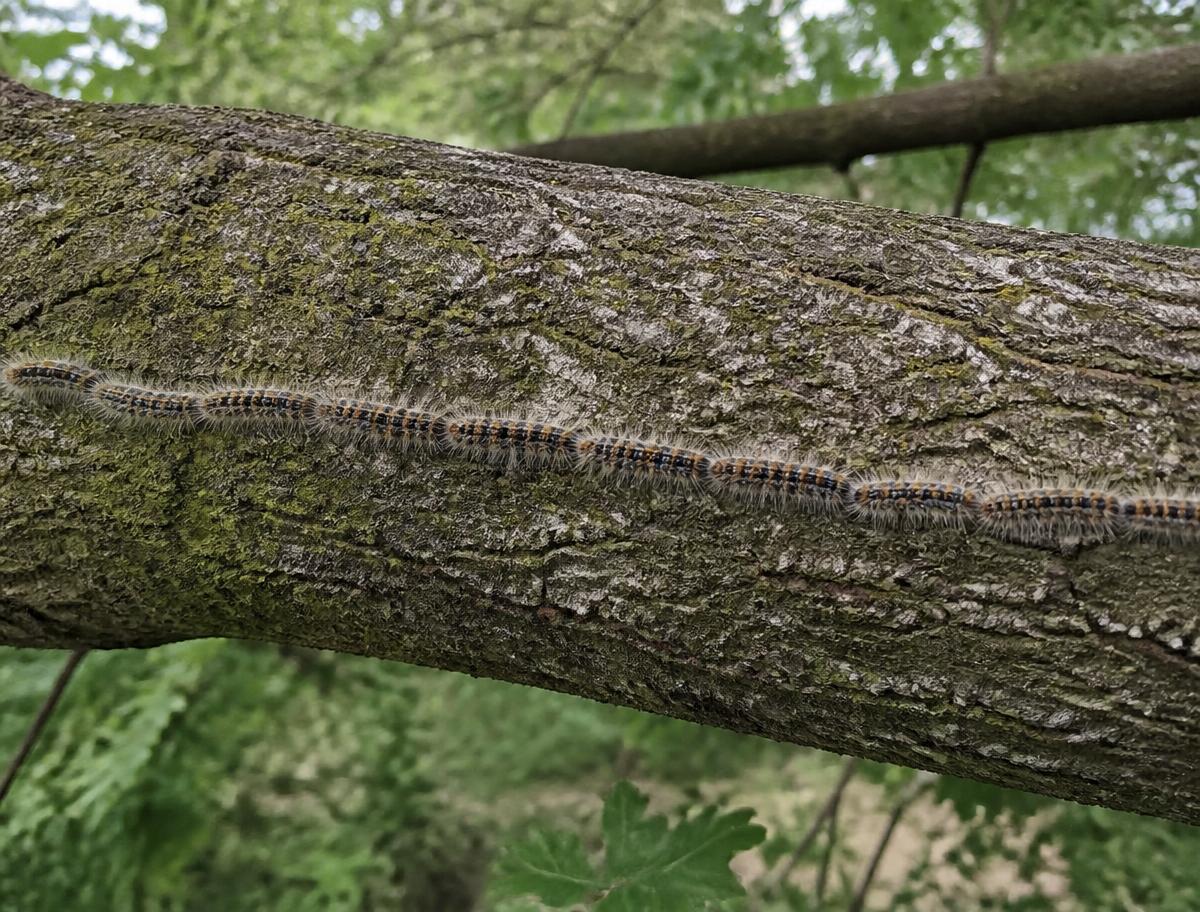
Caterpillars moving nose-to-tail in a line along an oak branch
Illustrative image — not a scientific reference photograph.

Processions

The behaviour the moth is named for: caterpillars move nose-to-tail in single file, sometimes in wide arrowhead formations, up and down the trunk between feeding areas and the nest.

  • Nose-to-tail single file
  • Often on the trunk
  • Most visible late spring into summer
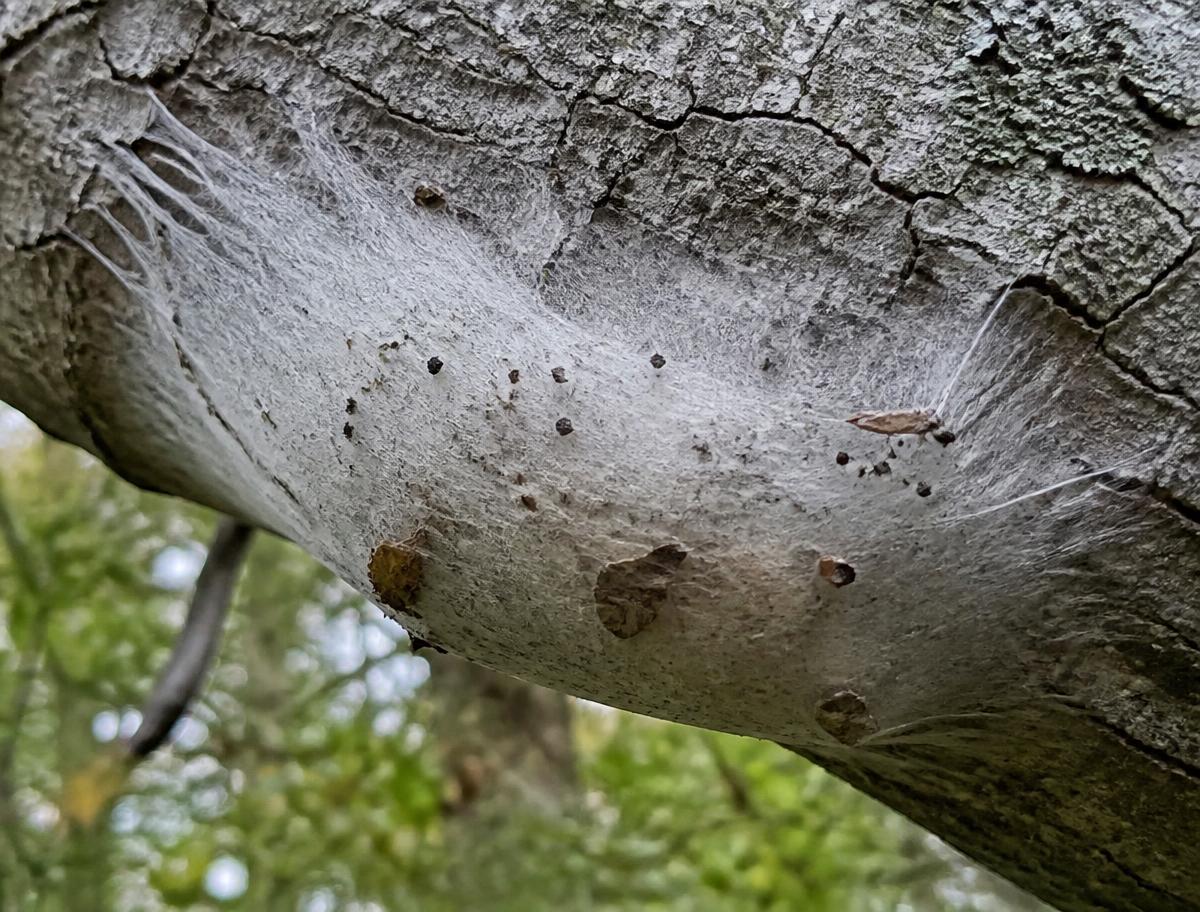
White silken webbing nest on the underside of an oak branch
Illustrative image — not a scientific reference photograph.

Nests

Silken white webbing tents on the trunk or branches, tightly matted against the bark rather than loose and airy. Older nests discolour to a dirty brown and can persist long after the caterpillars have gone.

  • Flat against trunk or branch
  • White, becoming stained
  • Contains shed skins and hairs
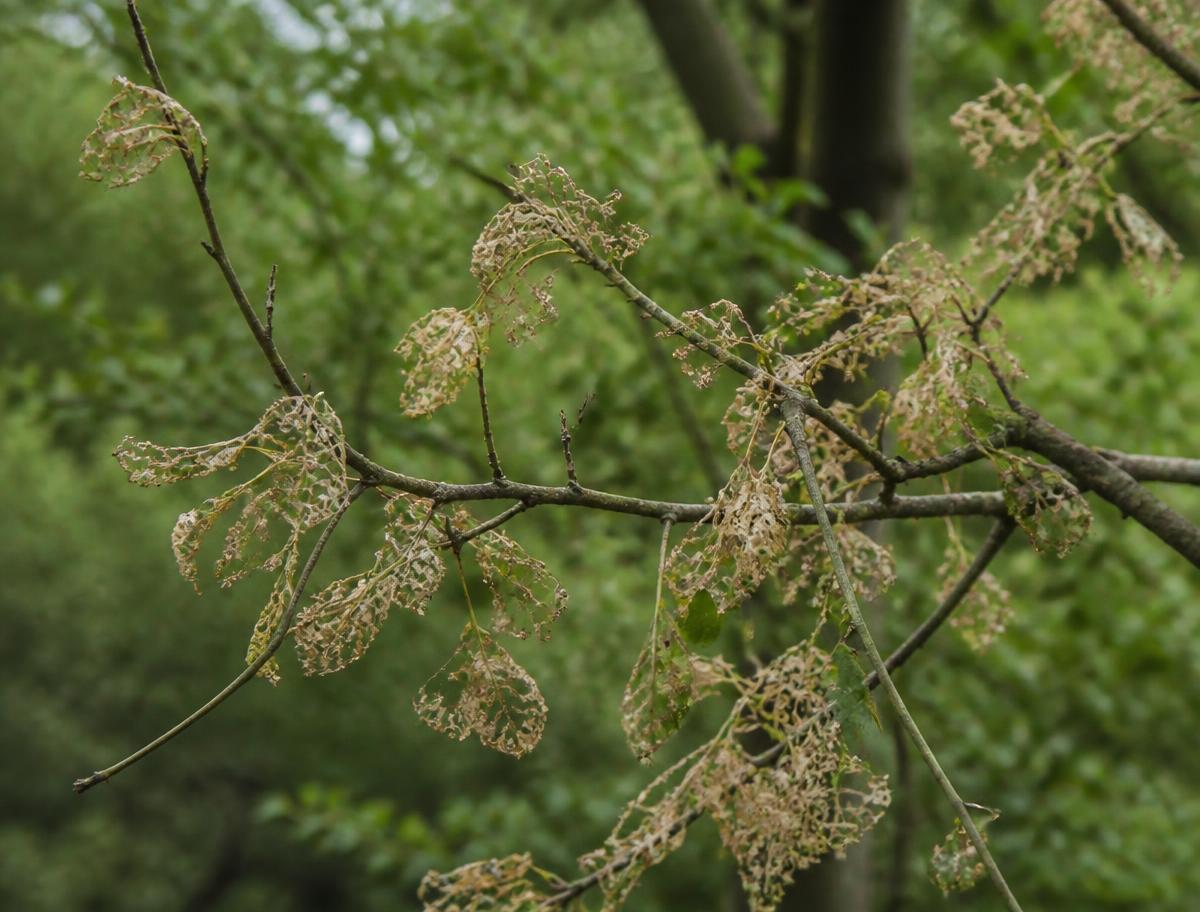
Oak branch with skeletonised and heavily eaten leaves
Illustrative image — not a scientific reference photograph.

Oak Tree Damage

Feeding produces ragged, skeletonised leaves and, in heavier years, noticeable defoliation of parts of the canopy. Healthy mature oaks usually recover, but repeated defoliation adds stress.

  • Skeletonised leaves
  • Patchy canopy thinning
  • Usually upper canopy first
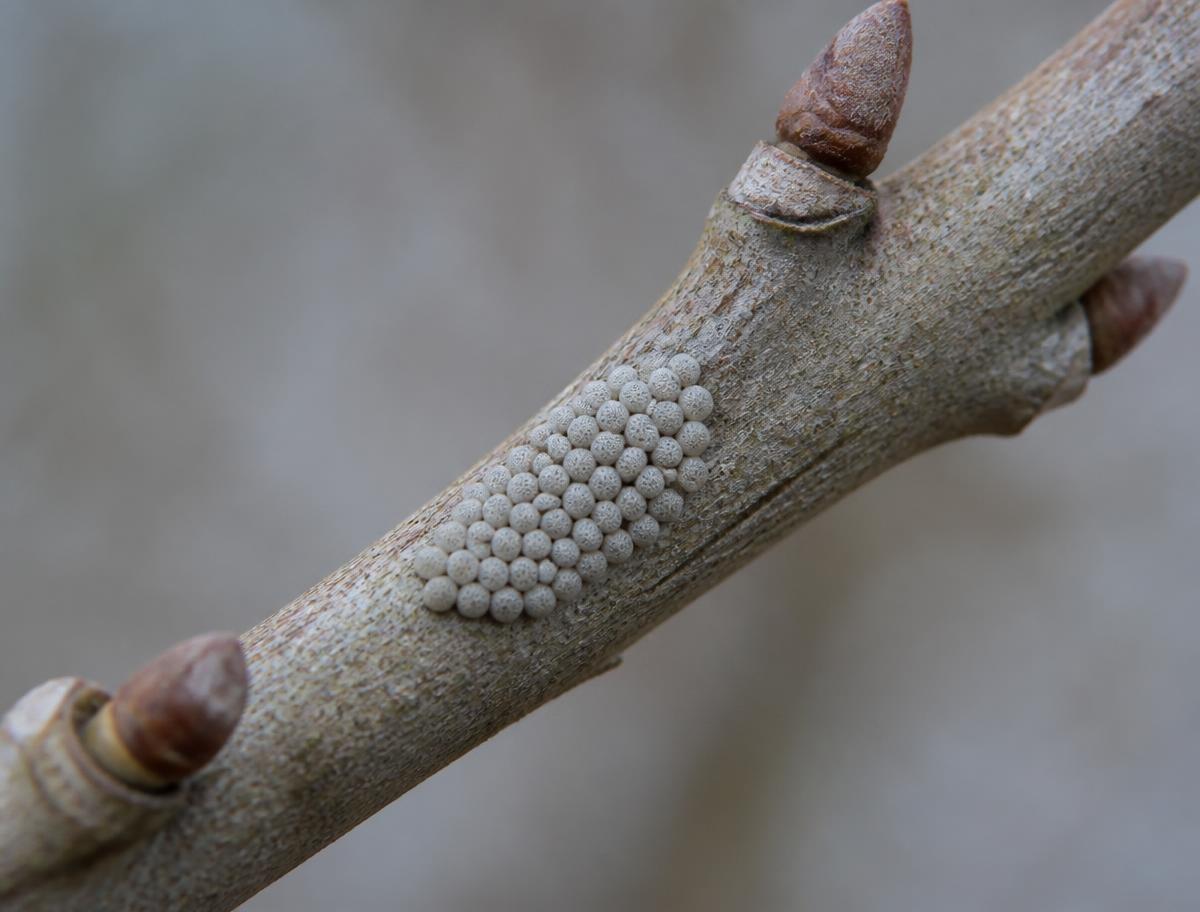
Plaque of small eggs on a slender oak twig in winter
Illustrative image — not a scientific reference photograph.

Egg Stage

Eggs are laid in neat plaques on twigs high in the canopy and are covered with scales that camouflage them against the bark. They overwinter there and hatch as the oak comes into leaf.

  • Small flat plaques on twigs
  • Camouflaged with scales
  • Present through winter
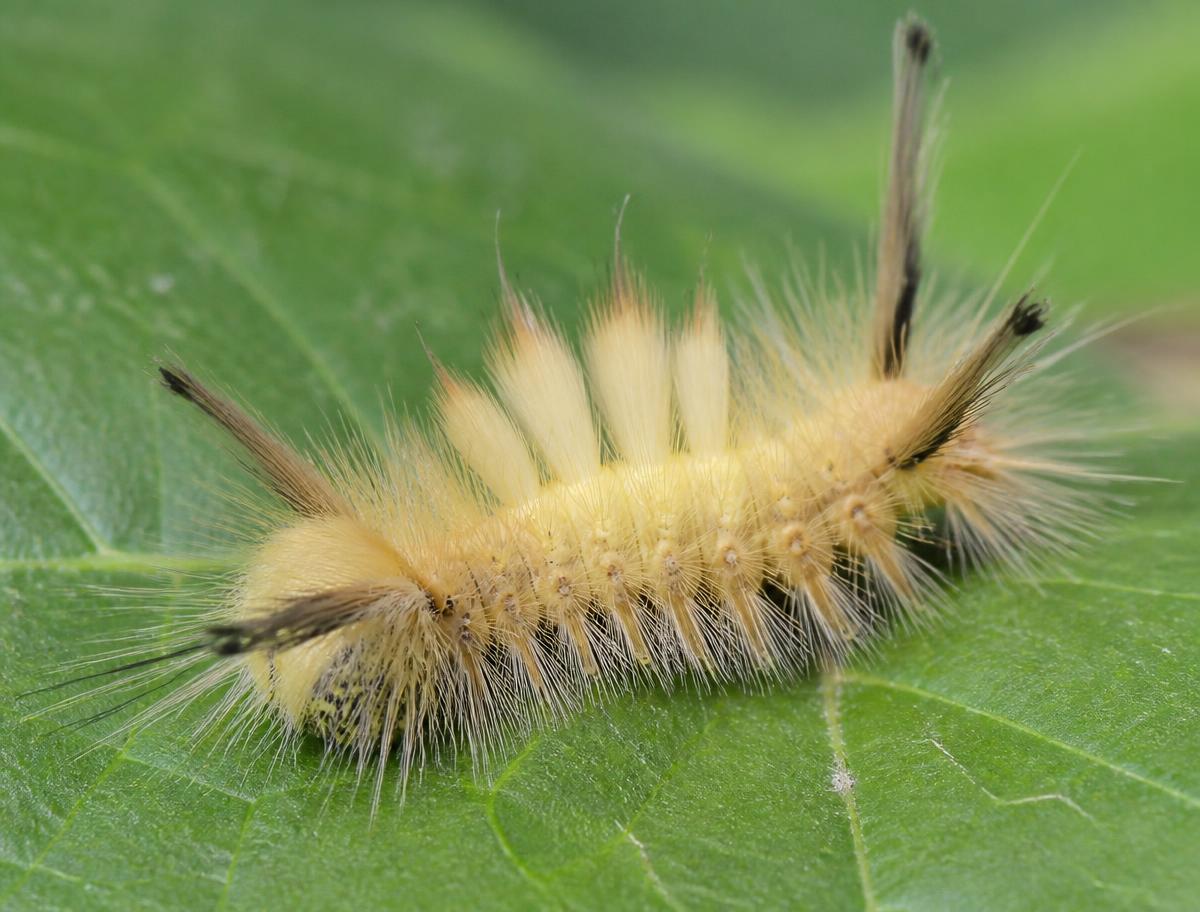
Fluffy pale native tussock moth caterpillar on a green leaf
Illustrative image — not a scientific reference photograph.

Common Lookalikes

Several harmless native caterpillars are regularly mistaken for OPM, including tussock moths, brown-tail moth larvae and the webbing of spindle ermine. Species, tree and behaviour together tell you more than appearance alone.

  • Wrong host tree
  • Solitary behaviour
  • Different hair pattern
See the lookalikes guide

Interactive guidance

What should I do?

Choose the type of site where you have seen suspected OPM and we will set out the practical steps in the order that makes sense for that setting.

Private Garden

Keep the area clear, then confirm what you are dealing with.

  1. 01Keep children and pets away from beneath the tree, and avoid the area on windy days when hairs can be carried.
  2. 02Bring in washing, cushions and children's toys from beneath or near the canopy.
  3. 03Do not attempt removal, and do not blow, brush or hose the nest — that disperses hairs.
  4. 04Check whether the tree is yours: boundary and neighbouring oaks need a conversation before works.
  5. 05Photograph from a distance, send it to us for an opinion, and report a suspected sighting to TreeAlert.

Seasonal behaviour

The OPM life cycle through the year

Emergence follows the oak, not the calendar. Understanding the stages explains why inspection timing matters and why old nests still count.

Late summer to early spring

Egg stage

Eggs sit in camouflaged plaques on twigs high in the canopy through autumn and winter. They are extremely difficult to see from the ground.

What this means for inspection

Winter is when climbing inspection or close canopy assessment can locate egg plaques, and when old nests are easiest to spot on bare branches.

Timings are indicative for the UK and vary by season, region and local weather. Always base inspection on conditions on site.

Management solutions

Professional OPM management, module by module

Effective management is a programme rather than a single visit: know your trees, inspect them at the right time, and act where exposure justifies it.

OPM Surveys

Professional visual inspection of oak trees from ground level, with binoculars where canopy height requires it, recording activity, nests, feeding damage and position relative to people.

Oak Tree Mapping

Identifying and recording every oak across a larger property so inspection is repeatable, nothing is missed between seasons, and findings can be compared year on year.

Risk Assessment

Classifying oak trees by observed activity, public exposure, tree location, how the site is actually used and the resulting potential risk — so effort goes where it matters.

Seasonal Monitoring

Repeat inspection timed to the relevant stages of the OPM life cycle rather than to fixed calendar dates, because emergence follows the season locally.

Pheromone Monitoring

Pheromone traps can indicate adult male flight activity on a site and help inform monitoring decisions. They are a monitoring tool within a wider strategy — they do not control or eliminate OPM on their own.

Nest Management

Assessing where intervention or professional removal is appropriate, based on exposure and access rather than the presence of a nest alone. Removal is specialist work with respiratory and skin risks.

Exclusion Areas

Temporary, proportionate access control around higher-risk trees — practical barriers, signage and route changes that people will actually follow.

Annual Management Programmes

Structured plans for organisations managing multiple oak trees, covering inspection timing, thresholds for action, documentation and annual review.

The framework

A seven-step OPM management framework

The structure we use with organisations responsible for multiple oak trees and public access.

  1. Step 1

    Oak Tree Inventory

    Establish what you actually have: every oak, its location, approximate size and the ground use beneath it.

  2. Step 2

    Baseline OPM Survey

    A first full inspection across the inventory, recording activity, nests and feeding damage tree by tree.

  3. Step 3

    Risk Classification

    Rank trees by exposure and observed activity so attention concentrates where people and trees meet.

  4. Step 4

    Seasonal Monitoring

    Repeat inspection at the life-cycle stages that matter, with findings recorded against the same tree records.

  5. Step 5

    Intervention Where Required

    Act where exposure justifies it — exclusion, nest management or professional removal — not everywhere by default.

  6. Step 6

    Documentation

    Keep a defensible record of what was inspected, what was found, what was decided and who was informed.

  7. Step 7

    Annual Review

    Review the season, adjust priority trees and inspection timing, and carry the record forward.

Official reporting

Found Suspected OPM?

Suspected Oak Processionary Moth sightings should be reported through the official TreeAlert tree pest and disease reporting service.

Our identification service provides preliminary guidance and does not replace official reporting.

Professional support

Need Professional OPM Management?

Professional support is available for sites requiring inspection, monitoring, risk management or safe nest removal. Most enquiries begin with a conversation about the site rather than a quotation.

  • OPM inspections
  • Oak tree surveys
  • OPM identification
  • OPM nest removal
  • Seasonal monitoring
  • Pheromone monitoring
  • Risk assessments
  • Golf course OPM management
  • School OPM management
  • Estate OPM management
  • Commercial OPM management
  • Private landowner support
  • Annual OPM management programmes

Oak Processionary Moth: common questions

Supported by

OPM Advice & Management UK is supported by Hertfordshire Pest Control, who provide the professional inspection, monitoring and nest management capability behind the advice on this site.

OPM Advice & Management UK is an independent information resource and is not part of, affiliated with or endorsed by Defra, the Forestry Commission, Forest Research or any local authority. Official organisations and resources are referenced to help visitors access authoritative information. Suspected OPM sightings should be reported through the appropriate official reporting channels.