Health and safety
OPM health risks explained
The hazard is the hairs, not the moth. Understanding how exposure happens is what makes sensible precautions possible.
Why the hairs matter
Thousands of microscopic barbed hairs per caterpillar
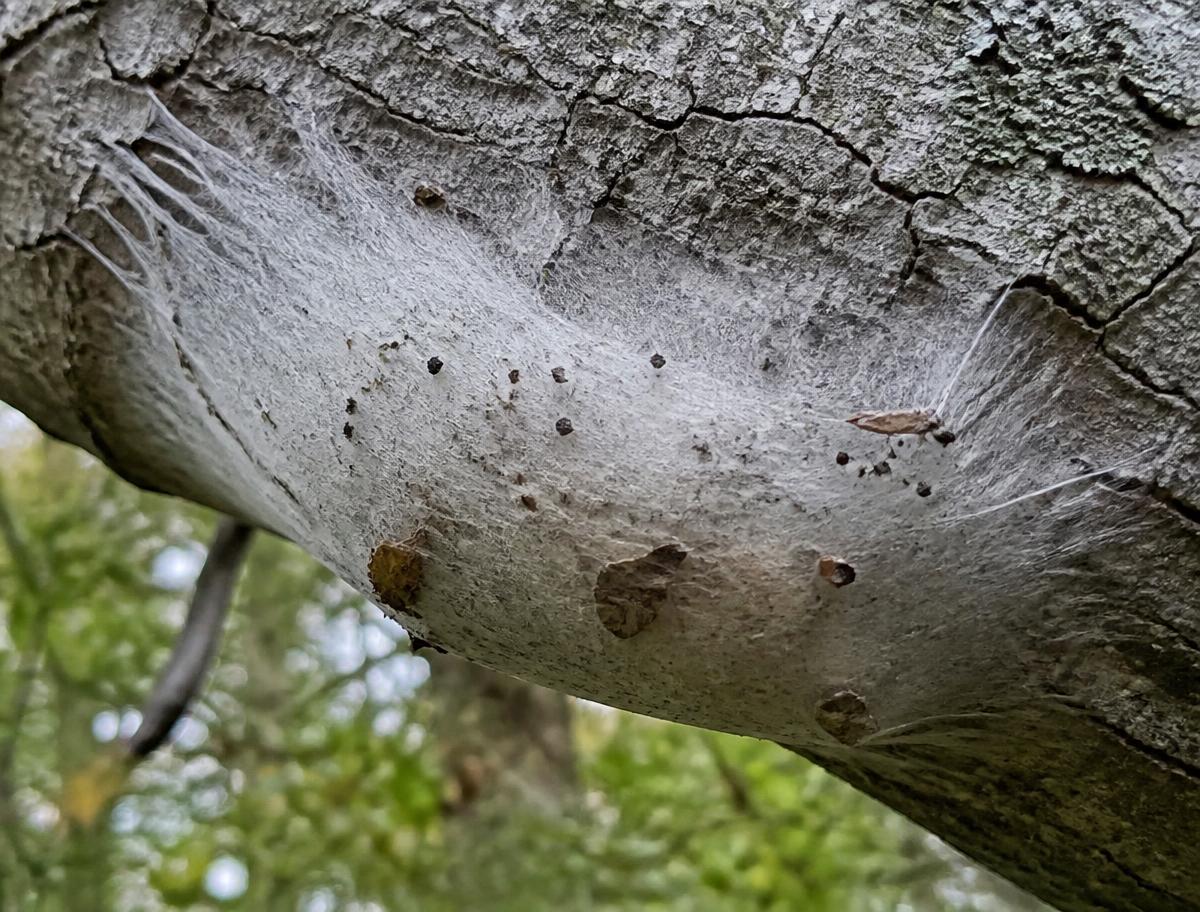
Each late-stage caterpillar carries an enormous number of tiny barbed hairs containing an irritant protein. The hairs detach readily, are light enough to be carried on the wind, and lodge in skin, eyes and airways. They also accumulate in nests, in shed skins, and on surfaces beneath an affected tree.
This is why guidance emphasises not disturbing nests. Brushing, hosing or blowing a nest does not remove the hazard — it releases it into the air, often into the face of the person doing it.
Exposure is very often indirect. Someone strimming beneath an oak, a child picking up a ball from under the canopy, or laundry left on a line nearby can all result in contact without anyone ever seeing a caterpillar.
How exposure happens
- Direct contact with caterpillars, nests, webbing or shed skins.
- Airborne hairs carried on the wind from an active tree or nest.
- Mechanical dispersal from strimming, mowing, blowing or pressure-washing beneath a tree.
- Secondary contact via clothing, tools, garden furniture, cushions or laundry left beneath the tree.
- Old nests: hairs remain in the webbing long after caterpillars have gone.
Symptoms
What contact with OPM hairs can cause
Reactions vary considerably between individuals and with the degree of exposure.
Skin
Itching rashes and raised weals, typically on exposed arms, neck and face, sometimes appearing hours after contact and persisting for days.
Eyes
Redness, watering, grittiness and irritation, particularly where hairs have been carried on the wind or transferred by rubbing.
Airways
Sore throat, coughing and irritation of the nose and airways from inhaled hairs; more pronounced in people with asthma or existing respiratory conditions.
Severe reactions
Uncommon, but significant allergic reactions including breathing difficulty can occur and require urgent medical attention.
Animals
Dogs and horses are particularly at risk through the muzzle, mouth and paws. Signs include drooling, swelling and distress, and warrant prompt veterinary advice.
Medical guidance
This page is information, not medical advice
For health concerns following possible contact, contact NHS 111 or your GP, and seek urgent care if breathing is affected or a reaction is severe. For animals, contact your vet.
Reducing risk
Practical precautions on managed sites
- Brief grounds staff and contractors before work near oak trees in season.
- Keep mowing, strimming and blowing away from affected canopies until assessed.
- Use temporary exclusion around higher-risk trees rather than site-wide closures.
- Record findings, decisions and briefings so there is a documented trail.
- Plan any nest works as specialist work, with appropriate protective equipment.