Identification

How to identify Oak Processionary Moth

Species, host tree and behaviour together are far more reliable than appearance alone. Work through the signs below before deciding what you have found.

Six signs

What to look for

Photographs on this page are illustrative and are provided to support written descriptions, not as verified reference specimens.

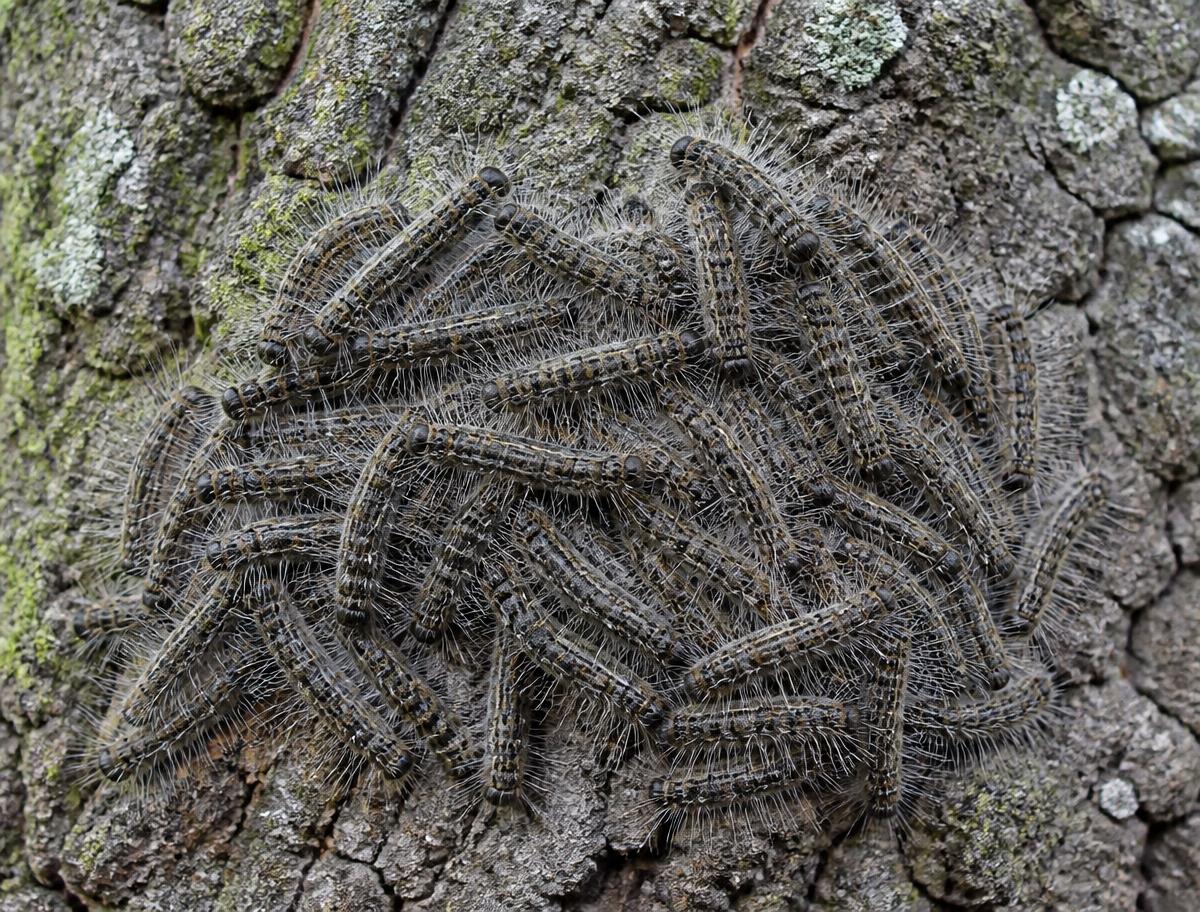
Cluster of hairy grey-brown caterpillars grouped on oak bark
Illustrative image — not a scientific reference photograph.

Caterpillars

Grey-brown bodies covered in very long white hairs, with a darker head and a distinct dark line along the back in later stages. They are almost always found in groups rather than alone, and they are found on oak.

  • Dense white hairs
  • Gregarious — rarely solitary
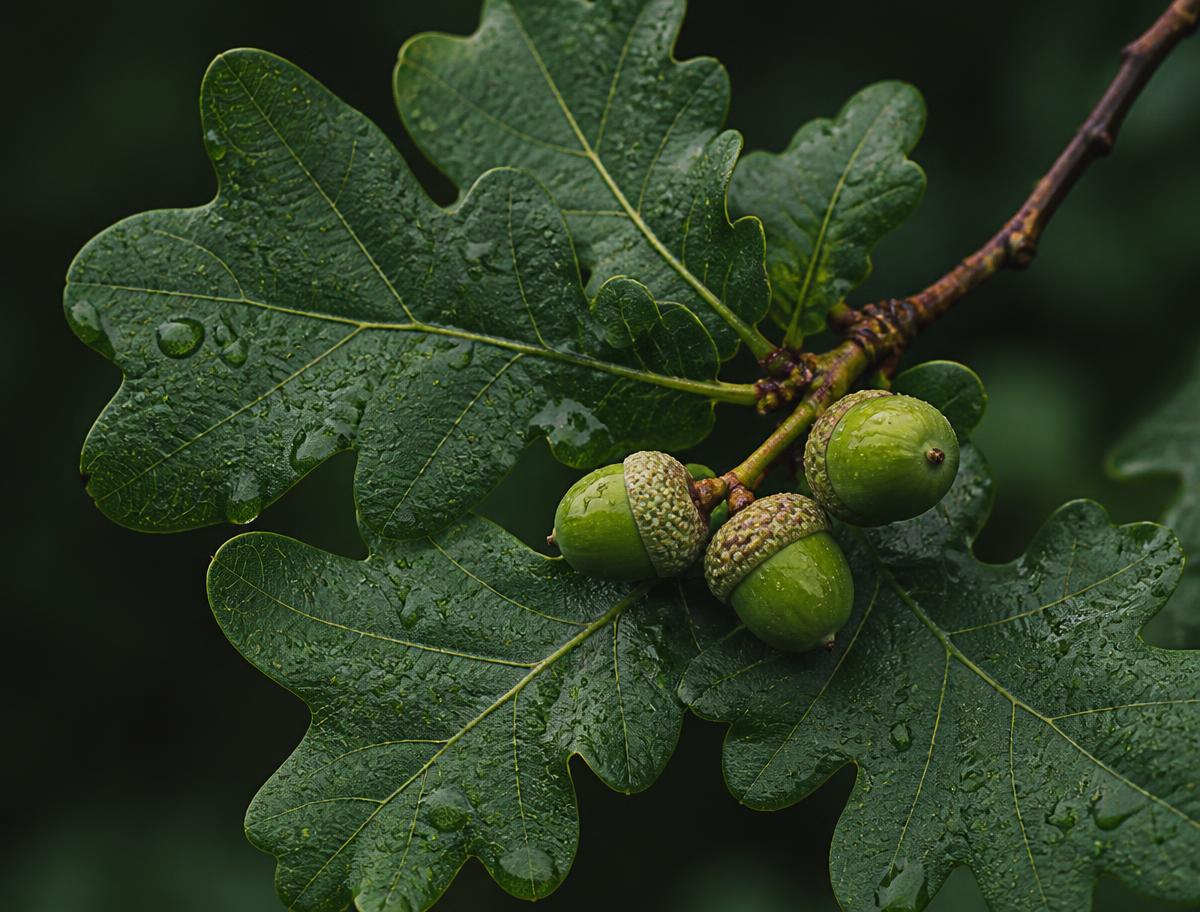
  • Found on oak, not other species
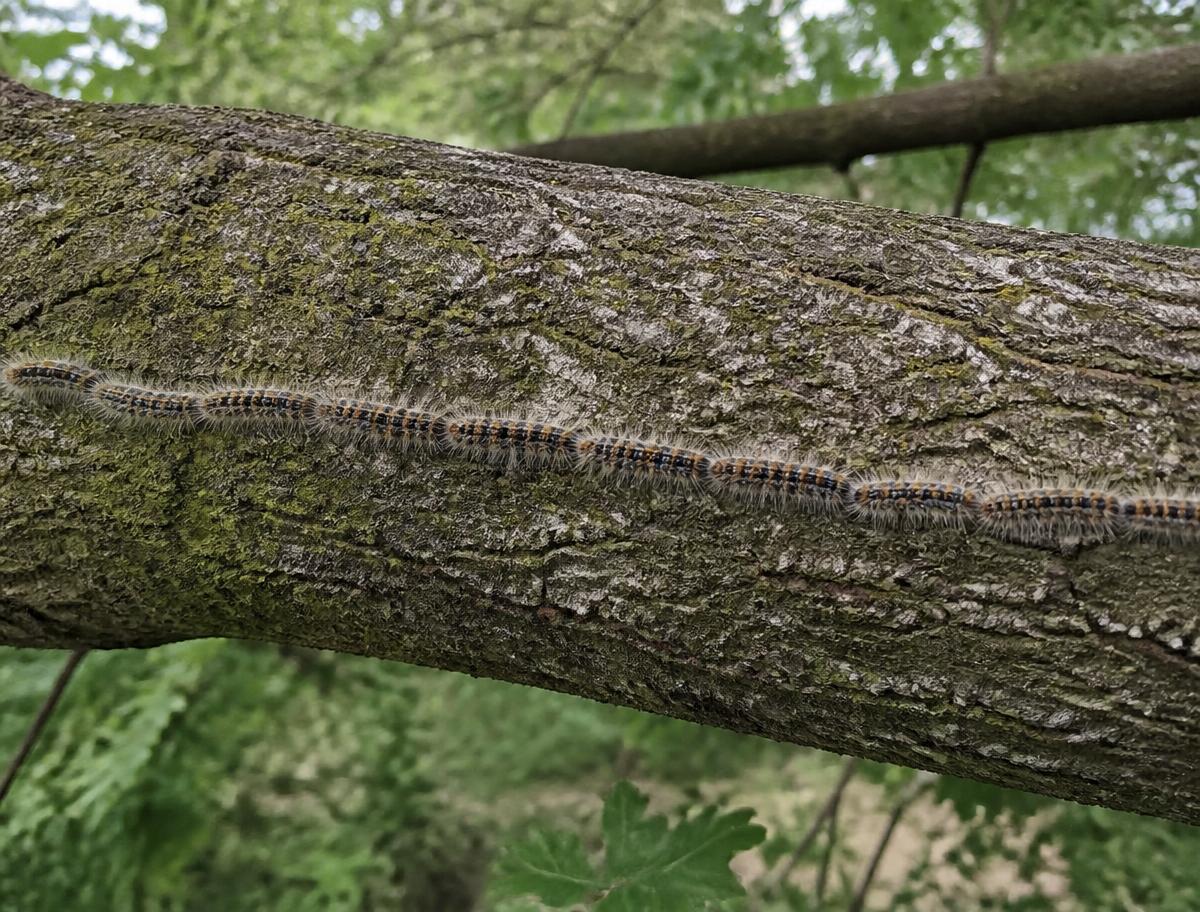
Caterpillars moving nose-to-tail in a line along an oak branch
Illustrative image — not a scientific reference photograph.

Processions

The behaviour the moth is named for: caterpillars move nose-to-tail in single file, sometimes in wide arrowhead formations, up and down the trunk between feeding areas and the nest.

  • Nose-to-tail single file
  • Often on the trunk
  • Most visible late spring into summer
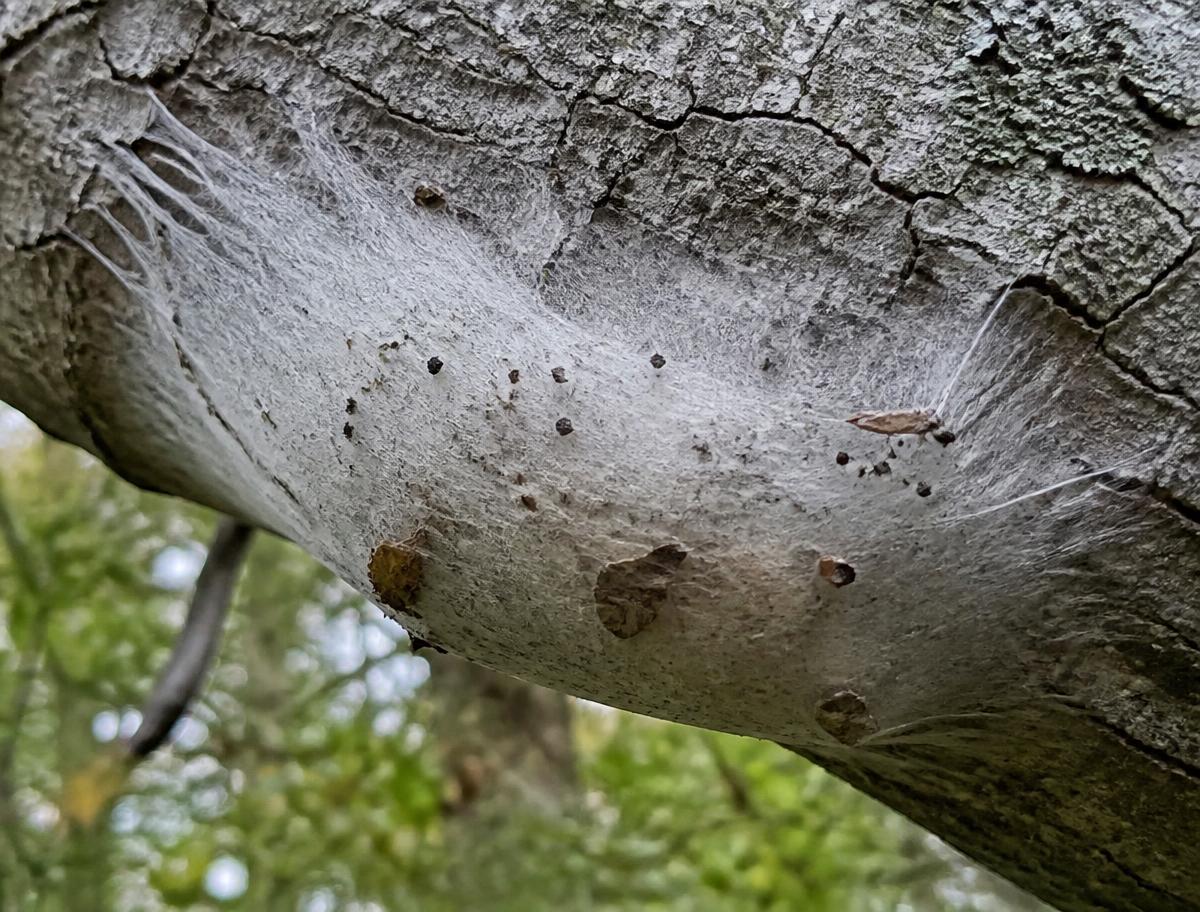
White silken webbing nest on the underside of an oak branch
Illustrative image — not a scientific reference photograph.

Nests

Silken white webbing tents on the trunk or branches, tightly matted against the bark rather than loose and airy. Older nests discolour to a dirty brown and can persist long after the caterpillars have gone.

  • Flat against trunk or branch
  • White, becoming stained
  • Contains shed skins and hairs
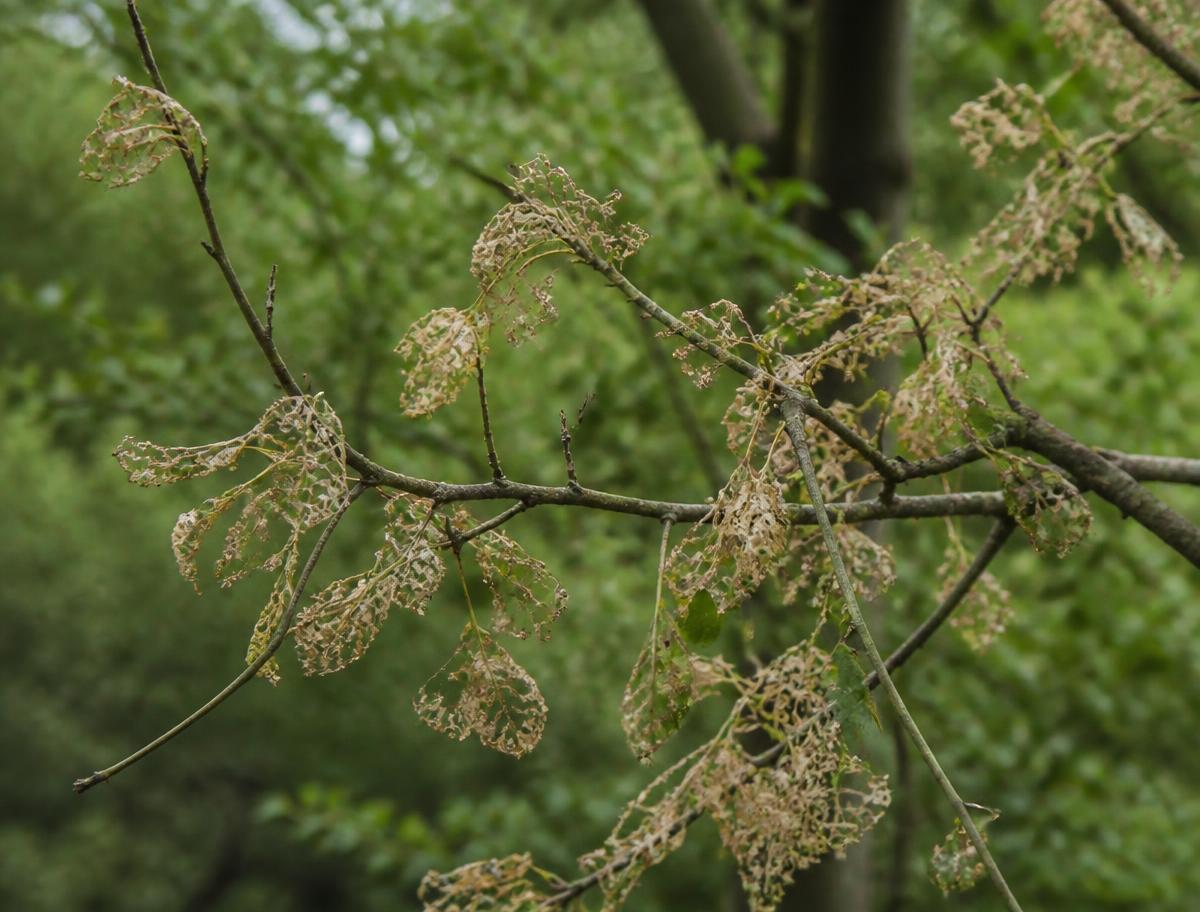
Oak branch with skeletonised and heavily eaten leaves
Illustrative image — not a scientific reference photograph.

Oak Tree Damage

Feeding produces ragged, skeletonised leaves and, in heavier years, noticeable defoliation of parts of the canopy. Healthy mature oaks usually recover, but repeated defoliation adds stress.

  • Skeletonised leaves
  • Patchy canopy thinning
  • Usually upper canopy first
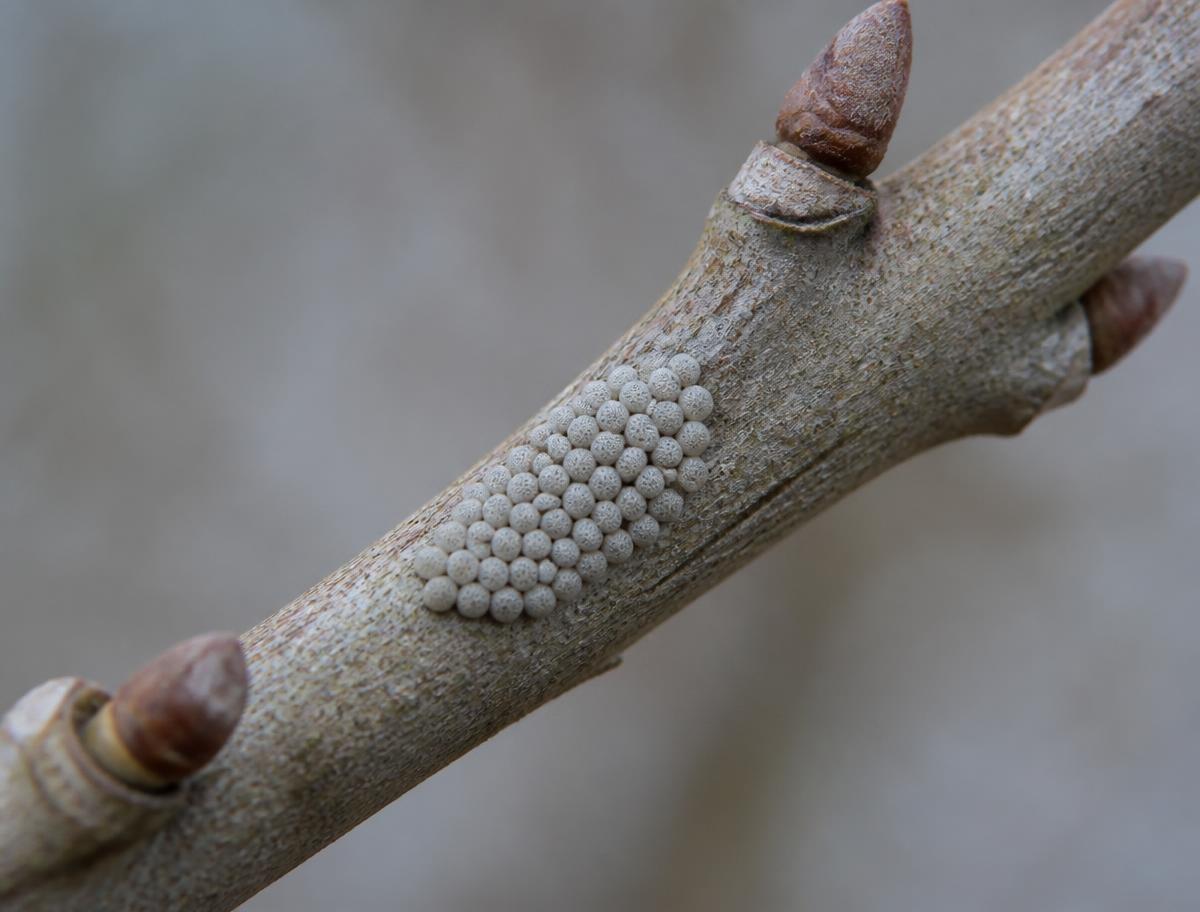
Plaque of small eggs on a slender oak twig in winter
Illustrative image — not a scientific reference photograph.

Egg Stage

Eggs are laid in neat plaques on twigs high in the canopy and are covered with scales that camouflage them against the bark. They overwinter there and hatch as the oak comes into leaf.

  • Small flat plaques on twigs
  • Camouflaged with scales
  • Present through winter
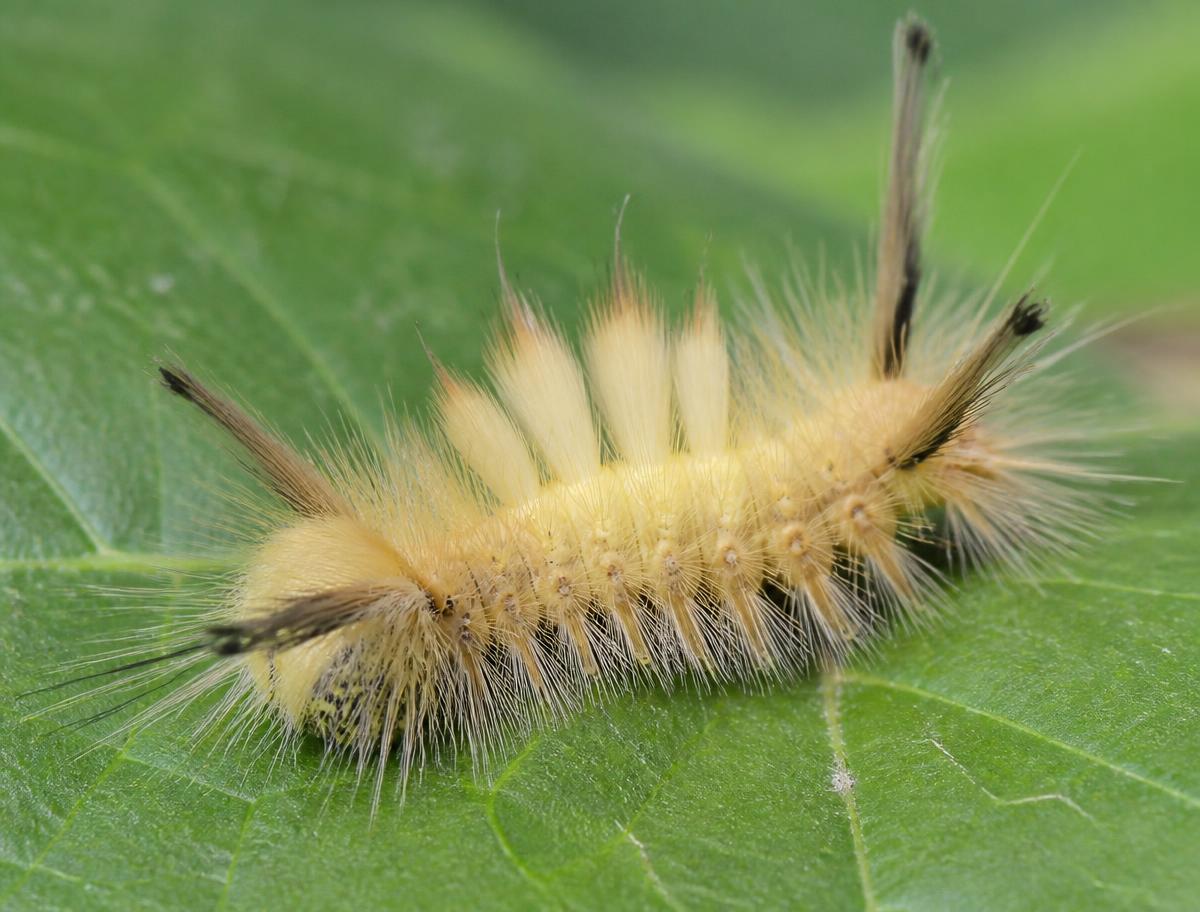
Fluffy pale native tussock moth caterpillar on a green leaf
Illustrative image — not a scientific reference photograph.

Common Lookalikes

Several harmless native caterpillars are regularly mistaken for OPM, including tussock moths, brown-tail moth larvae and the webbing of spindle ermine. Species, tree and behaviour together tell you more than appearance alone.

  • Wrong host tree
  • Solitary behaviour
  • Different hair pattern
See the lookalikes guide

Where to look

Position on the tree matters

Nests are most often found on the trunk and on the underside of larger branches, frequently at a fork or in a sheltered angle of the bark. Feeding damage generally appears first higher in the canopy, which is why it can be missed from directly beneath the tree.

Step back. Looking at an oak from ten or twenty metres away, ideally with binoculars, will tell you far more than standing at the base of the trunk — and it keeps you away from any hairs being shed.

Old nests persist. A discoloured, tattered web with no visible caterpillars still contains shed hairs and should be treated as a contact hazard.

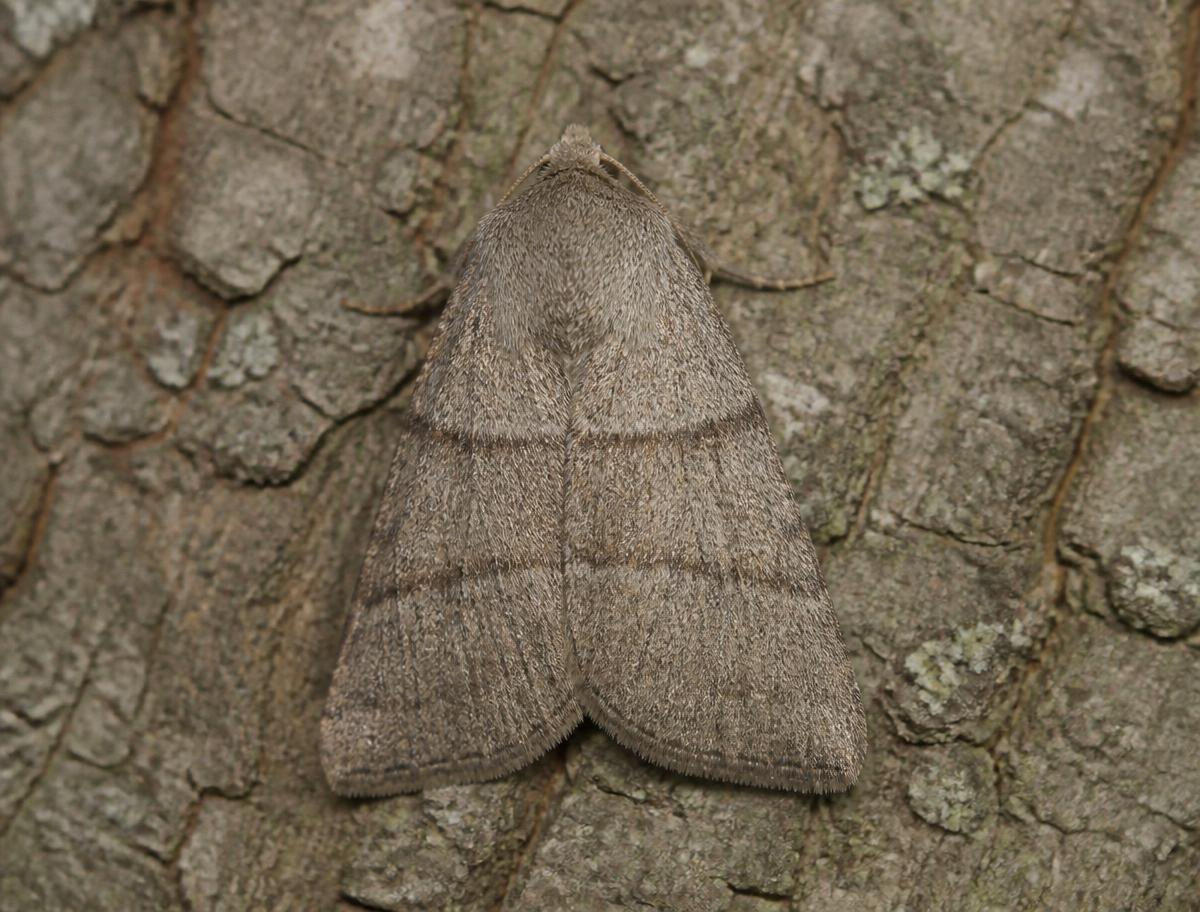
Plain grey-brown adult moth resting on oak bark at night
Adult moths are plain, nocturnal and rarely seen — identification relies on the caterpillar stages. Illustrative image — not a scientific reference photograph.

Timing

When each stage is visible

Emergence tracks oak bud burst rather than a fixed date, so what you can see depends on the season locally.

Late summer to early spring

Egg stage

Eggs sit in camouflaged plaques on twigs high in the canopy through autumn and winter. They are extremely difficult to see from the ground.

What this means for inspection

Winter is when climbing inspection or close canopy assessment can locate egg plaques, and when old nests are easiest to spot on bare branches.

Next steps

Identified something concerning?

Send photographs for an initial opinion, and report suspected sightings through the official route.

Not sure what you've found?

Ask an OPM Expert

Send clear photographs of the tree, the caterpillars or the suspected nest and our team will give you an initial visual opinion to help you understand your next steps.

Photo identification is preliminary and may not always be conclusive. A professional site inspection or official confirmation may be required.

Think it may be OPM?

Report Suspected OPM

Suspected Oak Processionary Moth sightings should be reported through TreeAlert, the official tree pest and disease reporting service. This is an external official service and opens in a new tab.

Sending us photographs does not replace official TreeAlert reporting.

Official reporting

Found Suspected OPM?

Suspected Oak Processionary Moth sightings should be reported through the official TreeAlert tree pest and disease reporting service.

Our identification service provides preliminary guidance and does not replace official reporting.

Identification questions