Understanding OPM
What is Oak Processionary Moth?
A non-native moth, established in parts of the UK, whose caterpillars are simultaneously a tree health issue and a public health concern.
The species
Oak Processionary Moth (Thaumetopoea processionea) is a moth native to central and southern Europe. In the UK it was accidentally introduced on imported oak planting stock and became established in London in the mid-2000s. It is now present across much of Greater London and parts of the neighbouring counties, with monitoring extending well beyond that area.
Why it matters
The caterpillar stages carry very large numbers of microscopic barbed hairs containing an irritant protein. These hairs are shed, become airborne in dry or windy conditions, and accumulate in nests and shed skins. Contact can cause itching skin rashes, eye irritation, sore throats and, less commonly, more significant allergic or respiratory reactions.
That combination — a tree pest that is also a human and animal health hazard — is what makes OPM a site management issue rather than purely an arboricultural one. The same infestation can be almost irrelevant in remote woodland and highly significant beside a school playground.
Impact on oak trees
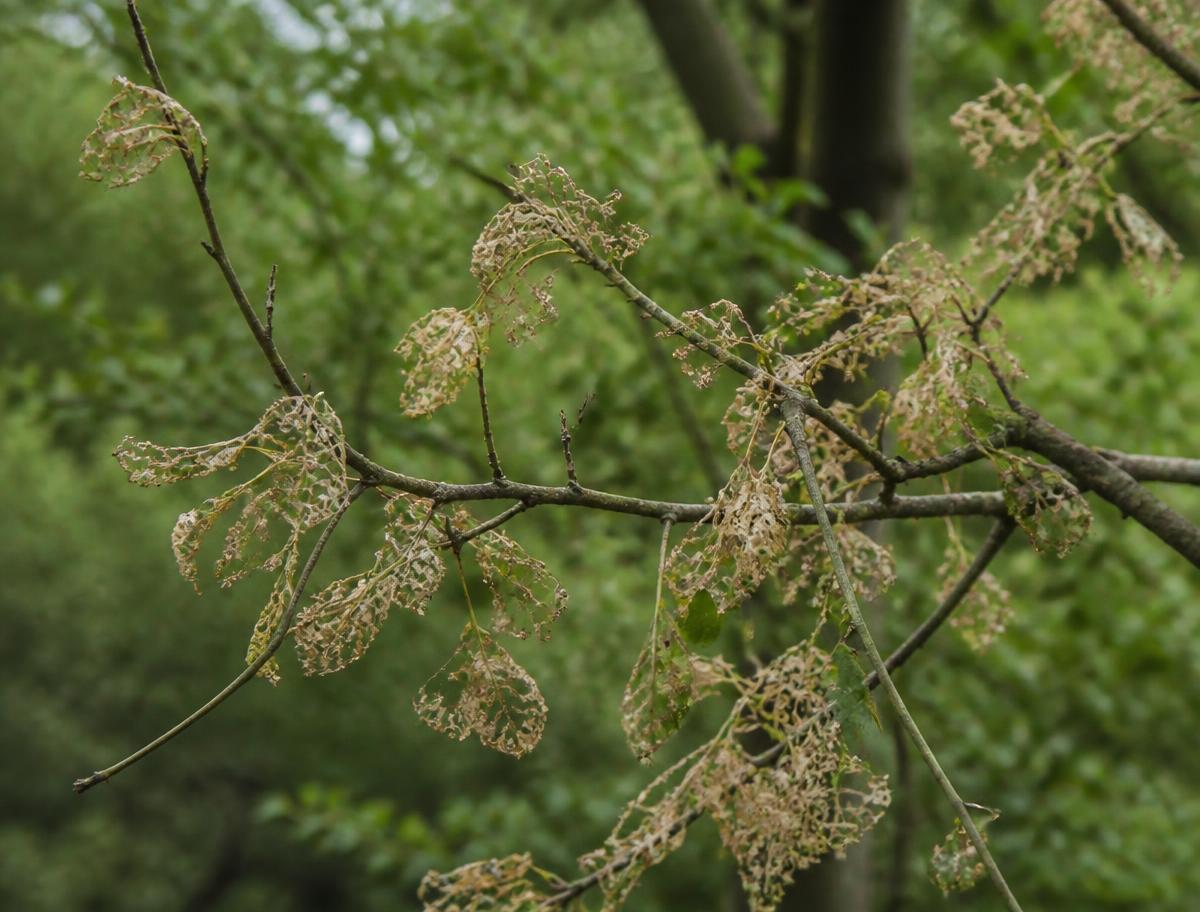
Feeding produces skeletonised leaves and, in heavier years, visible defoliation of parts of the canopy. Mature oaks in reasonable condition usually recover from a single season. The concern is cumulative: repeated defoliation, especially alongside drought stress or other pests and diseases, adds pressure to trees that may be centuries old.
Where it is found
OPM is associated with oak species. Distribution is monitored nationally, with control and movement requirements applying in defined areas. Because those boundaries are reviewed periodically, the current position should always be confirmed against Forestry Commission and GOV.UK guidance rather than assumed.
At a glance
- Host tree
- Oak species
- Risk stages
- Caterpillar stages and nests, including old nests
- Peak visibility
- Approximately May to July
- Adult moth
- Harmless, nocturnal, rarely seen
Life cycle
One generation a year, tracked to the oak
Each stage has different implications for what you can see and what should be done.
Late summer to early spring
Egg stage
Eggs sit in camouflaged plaques on twigs high in the canopy through autumn and winter. They are extremely difficult to see from the ground.
What this means for inspection
Winter is when climbing inspection or close canopy assessment can locate egg plaques, and when old nests are easiest to spot on bare branches.