What to do
You think you have found OPM. What now?
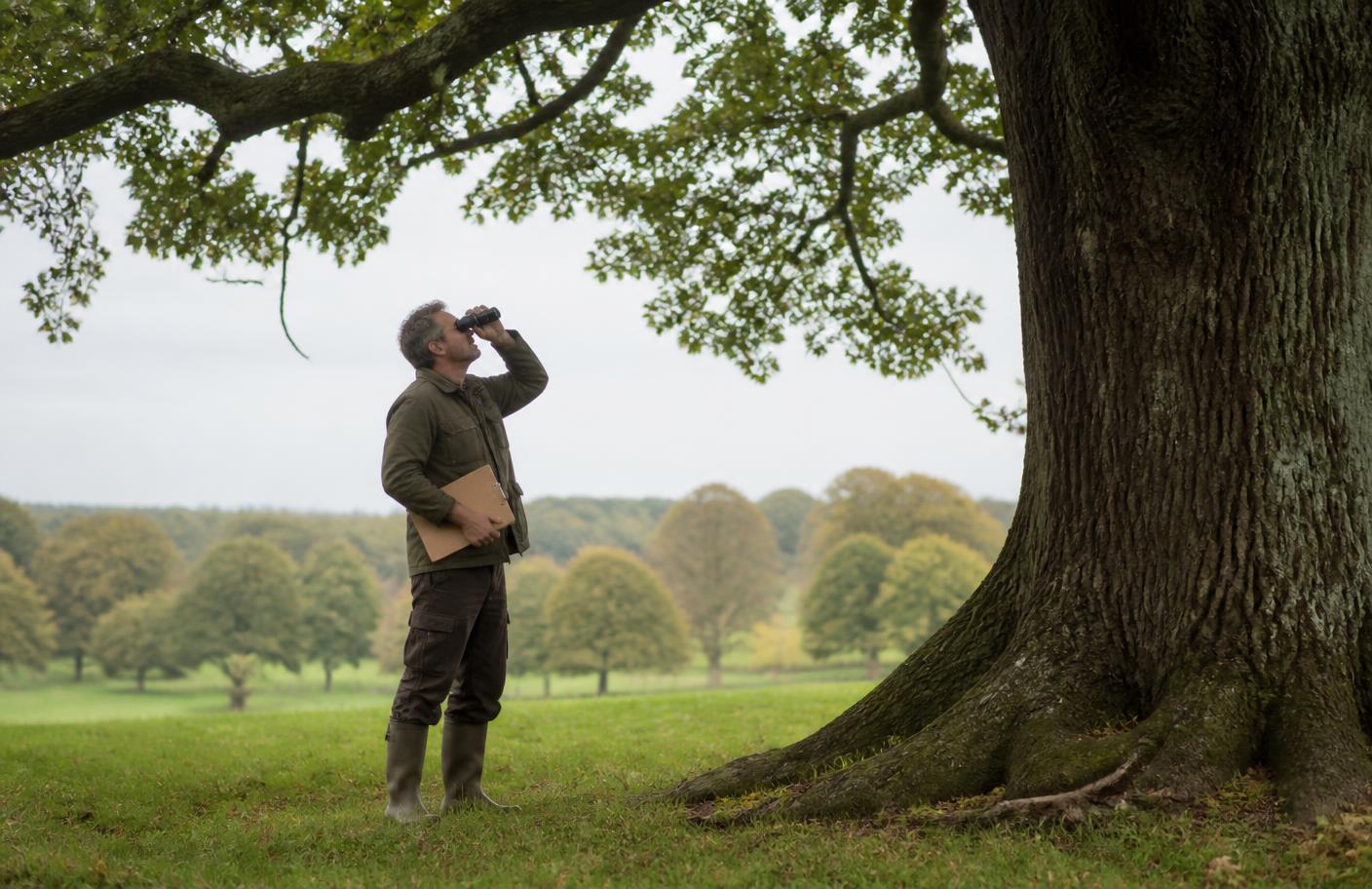
Nothing on this page needs to be done in a hurry, and nothing on it asks you to get close to the tree. Work through it in order.
Think you've found OPM?
Five steps, in the right order
Most people arrive here having seen something unusual on an oak tree and wanting to know whether it matters. Work through these steps calmly — nothing here needs to be done in a hurry, and nothing here asks you to get close to the tree.
We aim to respond within 48 hours.
- 01
Keep your distance
Do not touch, disturb or attempt to remove suspected caterpillars or nests.
- Keep people, children and pets away from the immediate area where appropriate
- Brief staff, contractors and visitors who work near the tree
- Avoid strimming, blowing or pressure-washing beneath the tree
- 02
Take photographs
If it is safe to do so, take clear photographs from a distance.
- The caterpillars, and the nest or webbing
- The oak leaves and the branch they are on
- The wider tree, so height and position are clear
- Approximate nest location and the surrounding area
Do not climb trees or put yourself at risk simply to obtain a photograph.
- 03
Ask an OPM expert
If you are unsure what you have found, send us your photos.
- Our OPM team can provide an initial visual opinion
- You will get practical guidance on what to do next
- Response targeted within 48 hours
- 04
Email the photographs to us
Send your photographs to our OPM team by email with the site postcode and a note on what sits beneath the tree.
- Include the whole tree as well as close-up shots taken with zoom
- Tell us what is beneath the canopy: path, playground, car park, paddock
- 05
Need professional help?
Some sites need more than guidance — particularly where several oaks or busy public areas are involved.
- Professional inspection and risk assessment
- Monitoring, nest management and safe removal
- Tree mapping and annual management planning
Interactive guidance
What should I do? Guidance by site type
The right response depends far more on who uses the ground beneath the tree than on the tree itself.
Private Garden
Keep the area clear, then confirm what you are dealing with.
- 01Keep children and pets away from beneath the tree, and avoid the area on windy days when hairs can be carried.
- 02Bring in washing, cushions and children's toys from beneath or near the canopy.
- 03Do not attempt removal, and do not blow, brush or hose the nest — that disperses hairs.
- 04Check whether the tree is yours: boundary and neighbouring oaks need a conversation before works.
- 05Photograph from a distance and email the photographs to our team for an opinion.
What not to do
Avoid these entirely
- Do not touch caterpillars, nests, shed skins or webbing — with hands, tools or garden equipment.
- Do not attempt to remove or destroy a nest yourself.
- Do not brush, hose, jet-wash, blow or vacuum a nest: it disperses hairs into the air.
- Do not strim, mow or use a leaf blower beneath an affected tree until it has been assessed.
- Do not let children or pets play beneath the tree while activity is present.
- Do not burn nests in situ, and do not spray with household products.
If contact has happened
After exposure to the hairs
- Do not rub or scratch. Rinse the affected skin with plenty of cool water and use soap if available.
- Remove and wash clothing separately at the highest temperature the fabric allows.
- Rinse eyes thoroughly with clean water if hairs may have reached them.
- Seek medical advice if a rash is severe or spreading, if breathing is affected, or if eyes remain irritated.
- Seek veterinary advice promptly for pets showing mouth, muzzle or paw irritation.
This is general information and is not medical advice. For health concerns, contact NHS 111, your GP, or seek urgent care if symptoms are severe.
The two routes
Identification guidance and official reporting
Not sure what you've found?
Ask an OPM Expert
Send clear photographs of the tree, the caterpillars or the suspected nest and our team will give you an initial visual opinion to help you understand your next steps.
Photo identification is preliminary and may not always be conclusive. A professional site inspection or official confirmation may be required.
Think it may be OPM?
Email Us Your Photos
Email photographs of the tree, the caterpillars or the suspected nest directly to advice@oakprocessionarymoth.co.uk, along with the site postcode and what sits beneath the tree.
We aim to respond within 48 hours. Photograph only from a safe distance.
Professional support
Need Professional OPM Management?
Professional support is available for sites requiring inspection, monitoring, risk management or safe nest removal. Most enquiries begin with a conversation about the site rather than a quotation.
- OPM inspections
- Oak tree surveys
- OPM identification
- OPM nest removal
- Seasonal monitoring
- Pheromone monitoring
- Risk assessments
- Golf course OPM management
- School OPM management
- Estate OPM management
- Commercial OPM management
- Private landowner support
- Annual OPM management programmes