Management solutions
Managing Oak Processionary Moth properly
Effective OPM management is a programme, not a single visit: know your oaks, inspect them at the right time, and act where exposure genuinely justifies it.
Principles
How management decisions are actually made
Four principles that keep OPM work proportionate, defensible and affordable.
Exposure before presence
The presence of a nest is not, by itself, a reason to intervene. Where the tree sits, who walks beneath it and how often decides the response.
Timing follows the tree
Emergence tracks oak bud burst, so inspection is scheduled against the season locally rather than against fixed calendar dates.
Records make it defensible
Consistent tree records, dated inspections and documented briefings are what allow an organisation to demonstrate a reasonable approach.
Proportionate intervention
Exclusion, monitoring and removal are different tools. Removing every nest on every tree is rarely the right or achievable answer.
Solutions
Management modules
Individual components combined to suit the site, the oak population and the level of public access.
OPM Surveys
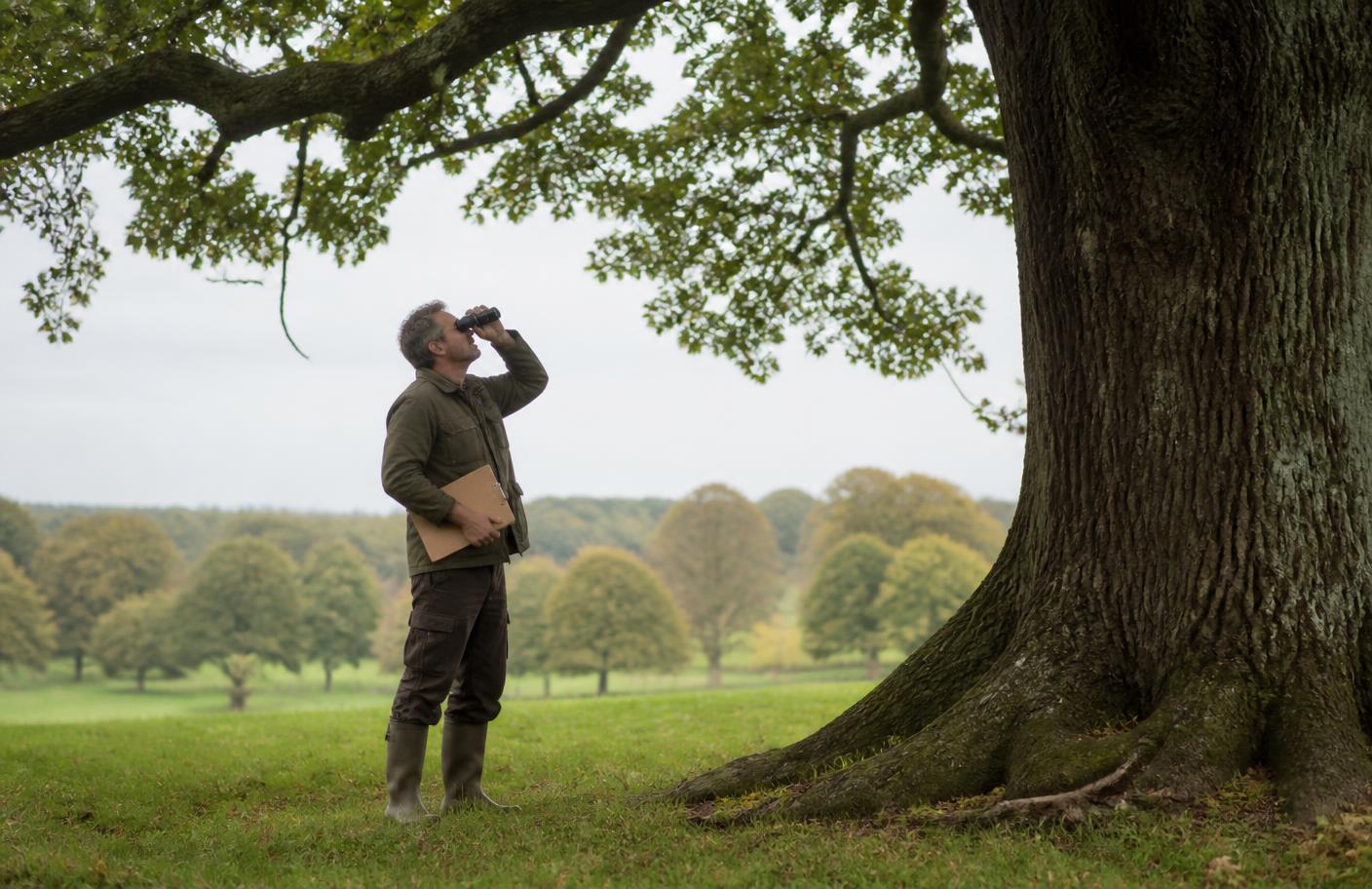
Professional visual inspection of oak trees from ground level, with binoculars where canopy height requires it, recording activity, nests, feeding damage and position relative to people.
Oak Tree Mapping
Identifying and recording every oak across a larger property so inspection is repeatable, nothing is missed between seasons, and findings can be compared year on year.
Risk Assessment
Classifying oak trees by observed activity, public exposure, tree location, how the site is actually used and the resulting potential risk — so effort goes where it matters.
Seasonal Monitoring
Repeat inspection timed to the relevant stages of the OPM life cycle rather than to fixed calendar dates, because emergence follows the season locally.
Pheromone Monitoring
Pheromone traps can indicate adult male flight activity on a site and help inform monitoring decisions. They are a monitoring tool within a wider strategy — they do not control or eliminate OPM on their own.
Nest Management
Assessing where intervention or professional removal is appropriate, based on exposure and access rather than the presence of a nest alone. Removal is specialist work with respiratory and skin risks.
Exclusion Areas
Temporary, proportionate access control around higher-risk trees — practical barriers, signage and route changes that people will actually follow.
Annual Management Programmes
Structured plans for organisations managing multiple oak trees, covering inspection timing, thresholds for action, documentation and annual review.
The framework
A seven-step OPM management framework
The structure used with organisations responsible for multiple oak trees and public access.
- Step 1
Oak Tree Inventory
Establish what you actually have: every oak, its location, approximate size and the ground use beneath it.
- Step 2
Baseline OPM Survey
A first full inspection across the inventory, recording activity, nests and feeding damage tree by tree.
- Step 3
Risk Classification
Rank trees by exposure and observed activity so attention concentrates where people and trees meet.
- Step 4
Seasonal Monitoring
Repeat inspection at the life-cycle stages that matter, with findings recorded against the same tree records.
- Step 5
Intervention Where Required
Act where exposure justifies it — exclusion, nest management or professional removal — not everywhere by default.
- Step 6
Documentation
Keep a defensible record of what was inspected, what was found, what was decided and who was informed.
- Step 7
Annual Review
Review the season, adjust priority trees and inspection timing, and carry the record forward.
Timing
Scheduling work around the life cycle
Each stage determines what can be seen, what can be surveyed and what can sensibly be done.
Late summer to early spring
Egg stage
Eggs sit in camouflaged plaques on twigs high in the canopy through autumn and winter. They are extremely difficult to see from the ground.
What this means for inspection
Winter is when climbing inspection or close canopy assessment can locate egg plaques, and when old nests are easiest to spot on bare branches.
Nest removal
Need a Nest Removed?
We maintain a trusted and accredited database of professional contractors who carry out OPM nest removal safely and to the correct standards. Send us the details and we will put you in touch with suitable contractors to choose from.
Never attempt to remove a nest yourself — the hairs remain hazardous long after the caterpillars have left.
Include the site address, tree type, nest height and photographs if you have them. We aim to respond within 48 hours.
Accredited operatives
Every contractor on our database holds the relevant qualifications, insurance and RPE training for OPM nest removal.
Vetted and reviewed
We check credentials, method statements and waste-disposal arrangements before a contractor is listed.
Matched to your site
Tell us the location and site type and we will match you with contractors who work in your area.