Who we help
OPM management for schools
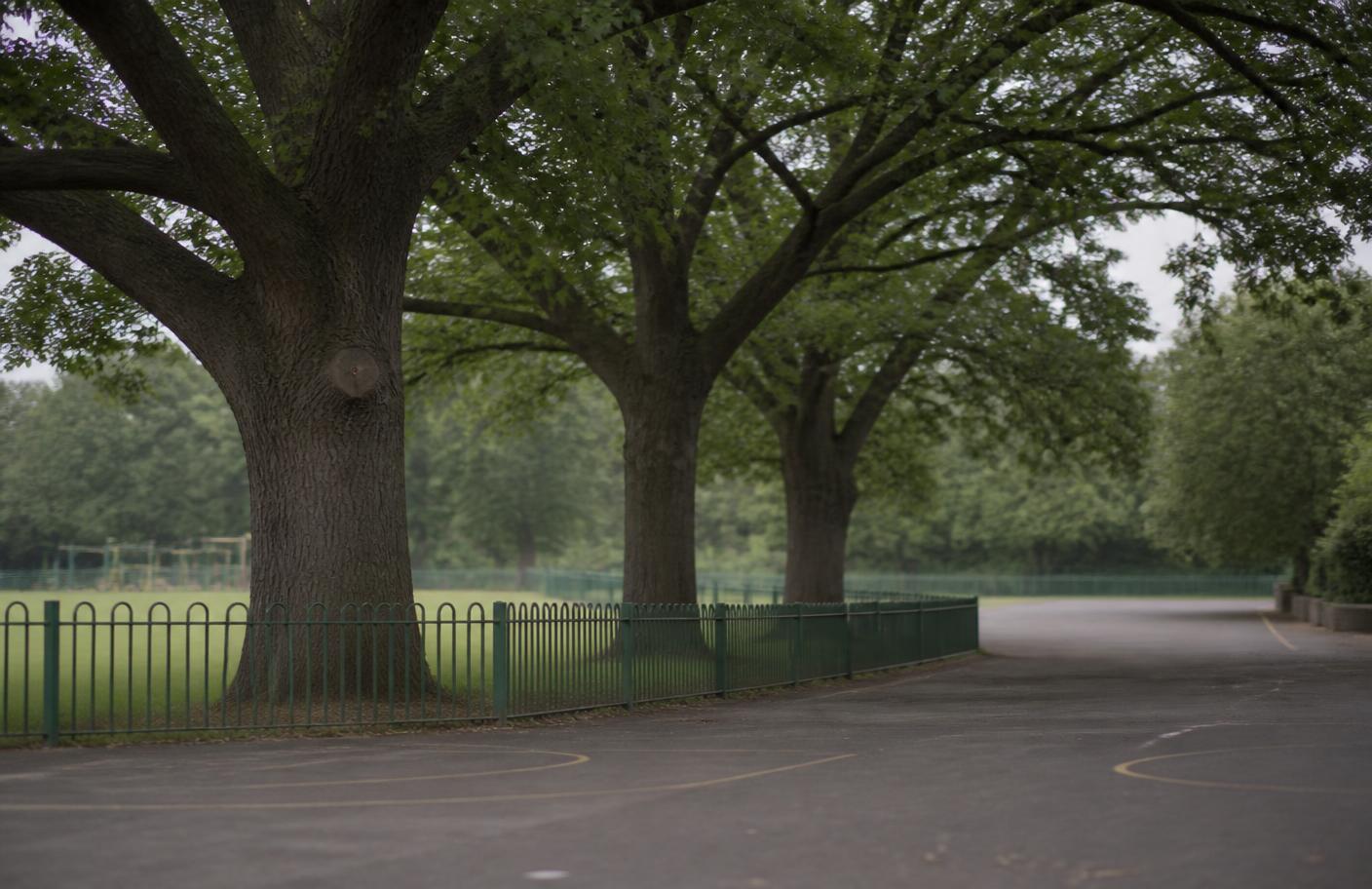
In a school, OPM is a site safety matter before it is a tree matter. Boundary oaks over playgrounds, playing fields and outdoor classrooms put the most vulnerable group directly beneath the canopy.
Site pressures
What makes this setting different
Children beneath the canopy
Playgrounds, field edges, forest school areas and seating are the priority. Children have no reason to avoid a tree unless told.
Staff briefing at scale
Teaching staff, lunchtime supervisors, caretakers and grounds contractors all need to know before the next break, not next week.
Documentation and duty of care
Findings, decisions and briefings need recording in the site risk assessment so the school can show a reasonable response.
Parent communication
A short, factual message prevents rumour. Precaution communicated well reassures; silence does the opposite.
Our approach
How OPM management works for schools
Scaled to the number of oaks on site and the way people actually use the ground beneath them.
- 01Priority survey of oaks overlooking play, sports and outdoor teaching areas
- 02Practical exclusion planning that works with supervision patterns and break times
- 03Written briefing notes for staff, caretakers and grounds contractors
- 04Inspection timed to term dates where possible, with holiday windows used for works
- 05Records suitable for inclusion in the school's risk assessment and estates reporting
The framework
The seven-step management framework
The same structure applies across sectors; the emphasis and timing change.
- Step 1
Oak Tree Inventory
Establish what you actually have: every oak, its location, approximate size and the ground use beneath it.
- Step 2
Baseline OPM Survey
A first full inspection across the inventory, recording activity, nests and feeding damage tree by tree.
- Step 3
Risk Classification
Rank trees by exposure and observed activity so attention concentrates where people and trees meet.
- Step 4
Seasonal Monitoring
Repeat inspection at the life-cycle stages that matter, with findings recorded against the same tree records.
- Step 5
Intervention Where Required
Act where exposure justifies it — exclusion, nest management or professional removal — not everywhere by default.
- Step 6
Documentation
Keep a defensible record of what was inspected, what was found, what was decided and who was informed.
- Step 7
Annual Review
Review the season, adjust priority trees and inspection timing, and carry the record forward.
Next steps
Identification and official reporting
Not sure what you've found?
Ask an OPM Expert
Send clear photographs of the tree, the caterpillars or the suspected nest and our team will give you an initial visual opinion to help you understand your next steps.
Photo identification is preliminary and may not always be conclusive. A professional site inspection or official confirmation may be required.
Think it may be OPM?
Email Us Your Photos
Email photographs of the tree, the caterpillars or the suspected nest directly to advice@oakprocessionarymoth.co.uk, along with the site postcode and what sits beneath the tree.
We aim to respond within 48 hours. Photograph only from a safe distance.