Identification
Caterpillars commonly mistaken for OPM
Most reports of suspected Oak Processionary Moth turn out to be native species. Three questions settle it in most cases: which tree, how many, and are they in a procession?
Side by side
The species most often confused with OPM
Brown-tail moth
Usual host
Hawthorn, blackthorn, bramble, coastal shrubs
How to tell
Also hairy, also gregarious, and also an irritant — but found on shrubs and hedgerow species rather than oak, with dense silk tents at branch tips.
Tussock moths (e.g. pale tussock)
Usual host
Oak, birch, hazel and others
How to tell
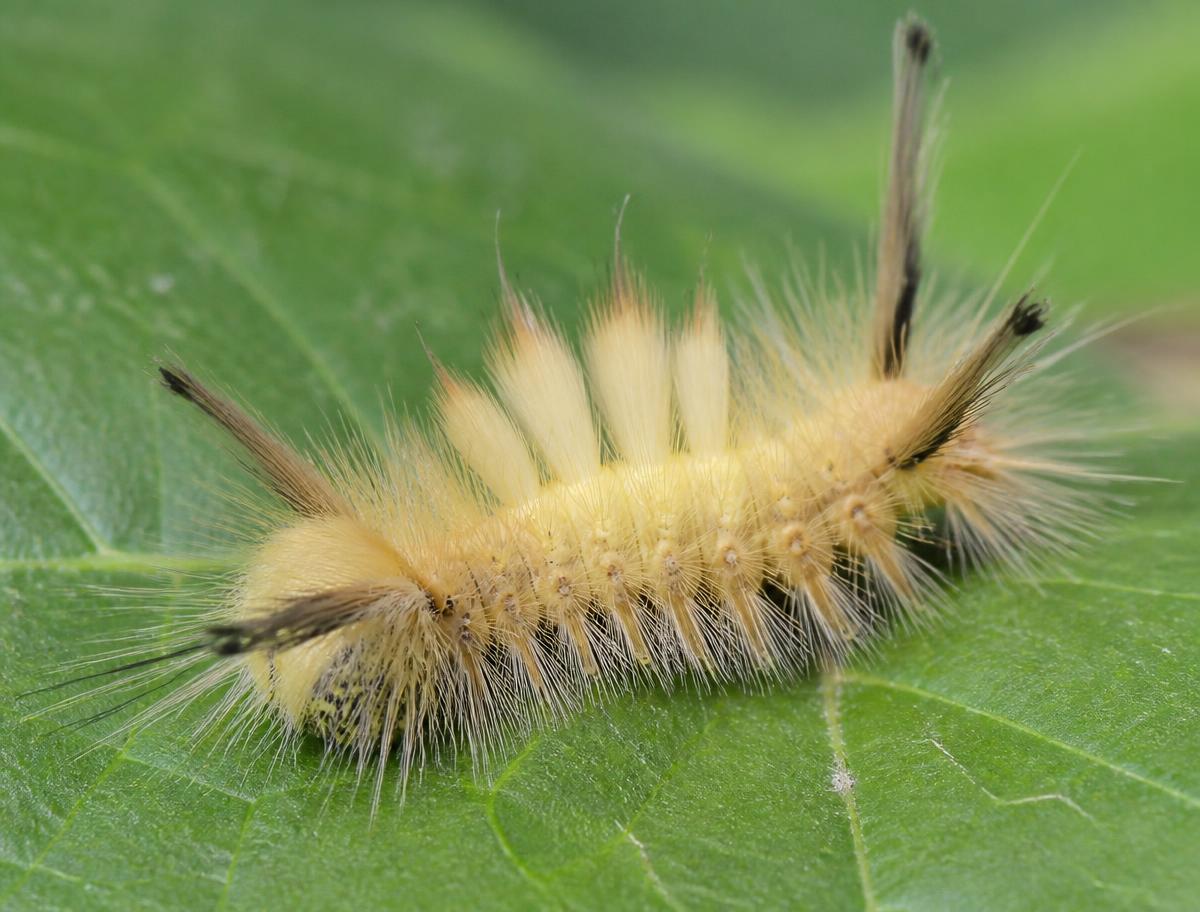
Often solitary, with distinctive tufts or 'shaving brush' hair pencils and frequently bright colouring. No processions, no communal nest.
Spindle ermine / bird-cherry ermine
Usual host
Spindle, bird cherry, hawthorn
How to tell
Produces dramatic sheets of webbing that can shroud whole shrubs. Alarming to look at, harmless, and on the wrong host tree for OPM.
Lackey moth
Usual host
Hawthorn, blackthorn, fruit trees, sometimes oak
How to tell
Gregarious in a silk hammock, but caterpillars are boldly striped blue, orange and white — far more colourful than OPM.
Vapourer moth
Usual host
Many broadleaf species including oak
How to tell
Solitary, with striking red spots and long hair pencils at head and tail. Unmistakably ornate compared with OPM's plain grey-brown.
Winter moth / oak leaf rollers
Usual host
Oak
How to tell
Green looper caterpillars that also defoliate oak in spring. Smooth-bodied and hairless, with no webbing nest.
Three checks
A quick elimination test
- Which tree is it on? OPM is associated with oak. Another host makes OPM unlikely.
- Are they together? OPM caterpillars are gregarious. A single caterpillar, however hairy, is probably something else.
- Is there a procession? Nose-to-tail movement along the trunk is the strongest behavioural indicator.
Important
When in doubt, treat it as OPM
Until identification is confirmed, apply the same precautions: do not touch, keep people and pets away from beneath the tree, and do not attempt removal. Precaution costs very little; a wrong assumption can expose people to hairs unnecessarily.